

Quality & safety of substances of human origin
Blood transfusion
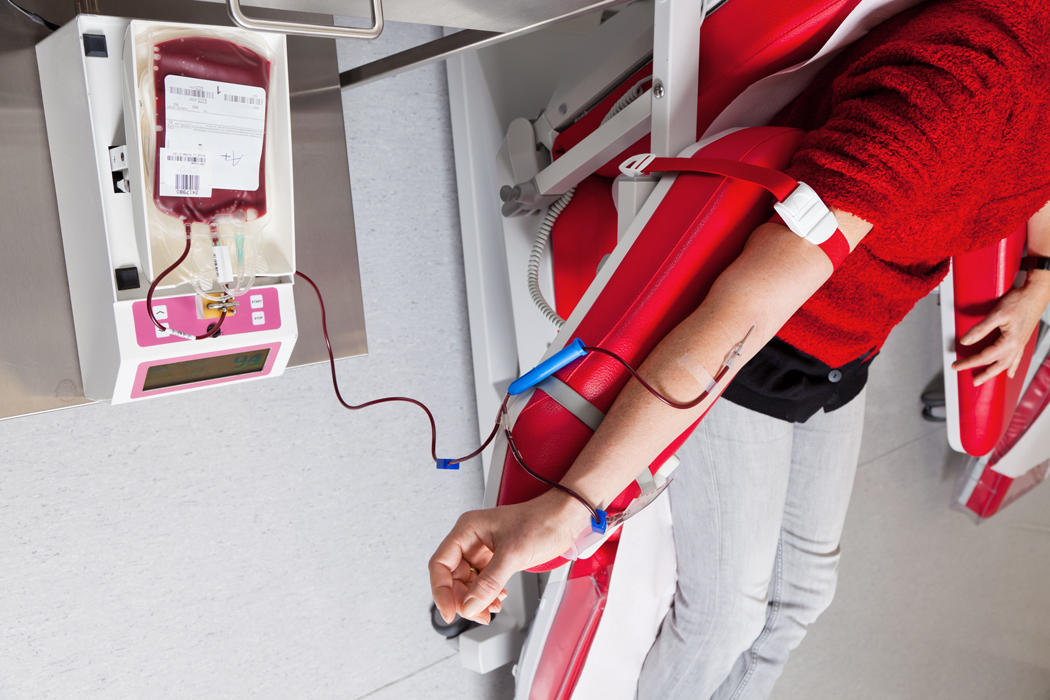
The EDQM’s transfusion activities, overseen by the European Committee on Blood Transfusion (CD-P-TS), include the collection of international data and monitoring of practices in Europe, knowledge sharing between organisations and experts through training and networking, and the elaboration of reports and guidance documents. Promoting voluntary and non-remunerated donation, mutual assistance, optimal use of blood and blood components and the protection of donors and recipients are the major guiding principles of these activities. They address ethical, legal and organisational aspects of blood transfusion to ensure the safety, quality and optimal use of blood and blood components, increasing their availability and avoiding wastage.
Work programme
Blood Guide
The CD-P-TS is responsible for the regular review and update of common technical standards for blood and blood components in its Guide for the preparation, use and quality assurance of blood components (the “Blood Guide”) and Good Practice Guidelines for blood establishments (GPGs for BEs), in accordance with Recommendation No. R (95) 15 on the preparation, use and quality assurance of blood components. All Council of Europe Committee of Ministers recommendations and resolutions related to blood transfusion are available at https://go.edqm.eu/BloodTexts.
The 21st Edition of the Blood Guide was published in April 2023 and introduced a number of improvements to the revision process. For the first time, all changes with respect to the previous edition were documented in a change log, accompanied by background documents detailing the scientific rationale behind the changes to standards. Both the change log and background documents were published alongside this edition.
Data collection and monitoring of practices
The CD-P-TS publishes annual activity reports on the donation, collection, testing, use and quality aspects of blood and blood components. Each report provides comprehensive activity data from the CD-P-TS member states and highlights new or changed practices, addressing trends in the blood sector in Europe.
In 2023, a report was published providing an overview of the variant Creutzfeldt–Jakob Disease (vCJD) deferral criteria applied to blood donation in European countries, together with a perspective on expected relevant policy changes in this regard.
Work is underway on a report detailing the trends and observations on the collection, testing and use of blood and blood components in Europe over the period 2020-2022, alongside a report providing an up-to-date mapping of the blood components being prepared and used. Both reports are expected for publication in 2024.
Risk behaviours with an impact on blood donor management and transfusion safety
A dedicated working group of the CD-P-TS is responsible for the continuous collection of data on the incidence and prevalence of sexually transmitted infections that might impact the safety of transfusions, as required by Resolution CM/Res(2013)3 on sexual behaviours of blood donors that have an impact on transfusion safety. In 2023, the working group compiled a compendium of deferral policies applied in Council of Europe member states to donors displaying behaviour that creates a risk for the safety of transfusion. A report detailing the outcome of this compilation will be published in 2024.
Plasma supply management – Anti-D immunoglobulin
The EDQM continues to help strengthen the implementation of measures to promote and support safe plasma donation and donor protection, and to ensure continued and safe access for patients to plasma-derived medicinal products for life-saving treatments.
Specifically in relation to plasma-derived anti-D immunoglobulin, the EDQM hosted a series of webinars, attended by over 500 participants. The objectives were to raise awareness on the challenges in the collection of anti-D plasma and the production of plasma-derived anti-D IgG products, and to explore potential solutions, including the development and use of alternative and complimentary anti-D products. The online training programme “Anti-D Immunoglobulin: Exploring collection, production and alternatives” can be consulted and viewed online.
Work is progressing on a set of recommendations based on the outcomes of the webinar series, expected for publication in 2024.
Optimal use of blood components and plasma-derived medicinal products
The EDQM has worked on the optimal use of blood components and plasma-derived medicinal products since the 1990s. It organises regular symposia – known as the Kreuth Initiatives – which provide a unique platform for exchanging and discussing current clinical practices and projections of future developments across Council of Europe member states. The outcome of these symposia are used to draft recommendations and legal instruments, which aim to provide stakeholders and decision makers in the field with a course of action, contribute to optimal use of resources and ultimately to achieve a higher degree of self-sufficiency. The next meeting, the Kreuth VI symposium, is currently being organised and is planned for early 2025.
Blood PTS and Blood QM Programmes

The EDQM continued to run the Blood Proficiency Testing Scheme (B-PTS) and the Blood Quality Management (B-QM) Programmes to support BEs in implementing the EU blood legislation and the standards laid out in the Blood Guide and the GPGs. Both programmes have been co-funded by the European Commission and the EDQM since 2010.
The external assessment of the testing capability of European BEs also continued in 2023. Seven B‑PTS studies were organised, with an average of 71 laboratories participating in each. The calculation of the average number of participants does not take into account the pilot study for bacterial testing of platelet components, for which the number of participants was limited on purpose. A new type of study was developed, for the bacterial testing of platelet components, and the pilot study was successfully rolled out in 2023.
In 2023, the B-QM Programme was run fully on-site. Eight assessment schemes were performed, some of them follow-up schemes in BEs which had benefited from virtual schemes in the previous two years.
A virtual training programme on Quality management review and key performance indicators in BEs was organised in October and November 2023; it ran over a period of five weeks. The number of participants was limited to 100 to facilitate discussions with the trainers. Weekly supporting materials and exercises were distributed to participants. The programme concluded with a three-day live session during which practical examples and case studies were discussed in an interactive format.