
Consumer health
Cosmetics
The EDQM helps ensure the safety and quality of cosmetics in Europe through the activities of the European Committee for Cosmetics and Consumer Health (CD-P-COS), set up to address emerging risks to human health arising from the use of cosmetics. It develops standards, policies and common product quality and safety requirements that enhance consumer health protection in this field.
Meetings
The CD-P-COS held its 2023 annual plenary meeting, with all its members and observers in attendance, on 14 March. It also participated in a joint meeting with the European Network of Official Cosmetics Control Laboratories (OCCL Network), composed of over 50 OCCLs from Europe and beyond, working together to co-ordinate market surveillance and strengthen testing capacity. This was an opportunity to combine efforts to improve the market surveillance of perfumes, hair dyes, sunscreens and baby products and thus reduce non-compliance in these product groups.
Work programme
The CD-P-COS reviewed the 2016 “Guidance on essential oils in cosmetic products” and prepared draft amendments on quality requirements and recommendations for risk assessment. The revised second edition will be published in 2024.
The CD-P-COS launched the review of the 2017 publication “Safer tattooing – Overview of current knowledge and challenges of toxicological assessment”. This guide addresses the inherent microbiological and toxicological risks of intradermal injection of tattoo inks and permanent make-up, supplementing Committee of Ministers Resolution ResAP(2008)1 on requirements and criteria for the safety of tattoos and permanent make-up. The new edition will update these guidelines and support national authorities and ink manufacturers in conducting mandatory risk assessments.
As part of its public awareness activities, the committee recommended that national competent authorities (NCAs) co-ordinate information campaigns designed to inform consumers to help them play a more active role in protecting their own health by avoiding known risks. Examples cited were infographics, social media campaigns, brochures and other advertising that could be jointly prepared.
The OCCL Network members and the EDQM undertook a significant promotional campaign in 2023, seeking to raise the profile of the OCCL Network among the general public and decision makers in the member states. A series of portraits of selected laboratories and a video presentation are planned, with diffusion throughout 2024.
Publication
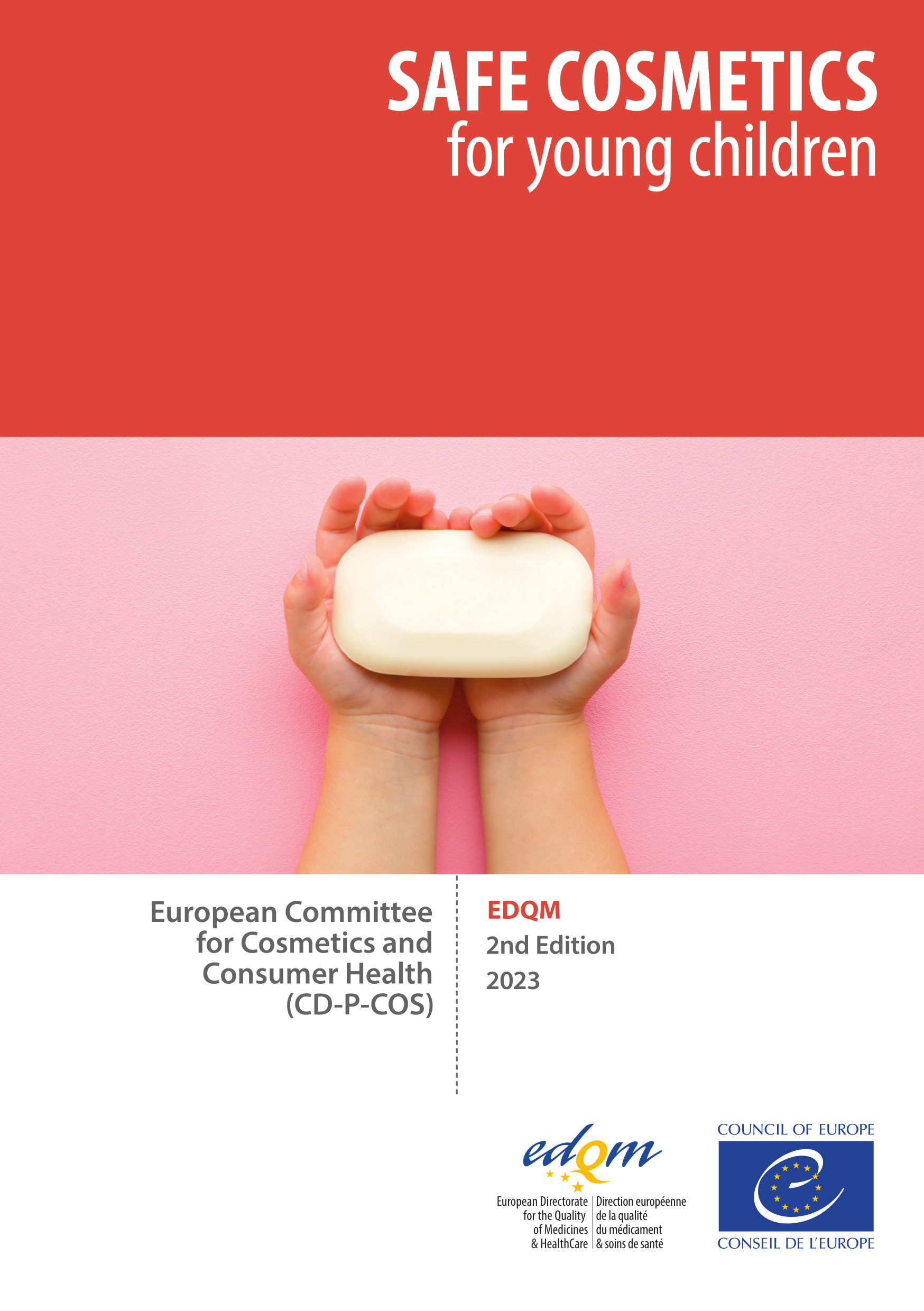
Safe cosmetics for young children
The second edition of Safe cosmetics for young children was published in 2023. This guide, for manufacturers and safety assessors, reflects the state-of-the-art in the field, and addresses for the first time topics such as endocrine disruptors and nanomaterials.
The OCCL Network
Quality control of cosmetics: market surveillance studies
The Swedish Medical Products Agency hosted the 12th meeting of the OCCL Network in October 2023. The meeting brought together 43 participants from national authorities of 24 countries.
The network runs and co-ordinates market surveillance studies (MSS) to verify regulatory compliance of cosmetics in Europe. Within this framework, concerns were raised over findings of prohibited substances (hydroquinone, mercury and corticosteroids) in samples of skin whitening products.
Another MSS found formaldehyde present at levels over 10 ppm in cosmetics for which the list of ingredients did not include any formaldehyde releaser. This finding is an issue for the safety of sensitised consumers.
An MSS on nail varnishes is in progress to determine their nitrosamine content.
It was decided to continue the MSS on cosmetics for children, started in 2011, to monitor their compliance with European regulations.
Nitrosamines
Several OCCLs worked on the validation of an analytical procedure for the determination of non-polar N-nitrosamines in cosmetics by LC-MS/MS.
PTS studies
In 2023, one multi-analyte Proficiency Testing Scheme (PTS) study was finalised, giving the participants the opportunity to assess their ability to determine camphor, menthol, safrole, methyl eugenol and ethanol in cream and mouthwash. Another study focused on the determination of thioglycolic acid, thiolactic acid and the pH.
Communication with partners and stakeholders
The EDQM shared information on market surveillance activities of the OCCL Network with the Platform of European Market Surveillance Authorities for Cosmetics of the European Union (EU PEMSAC). The EDQM and the European Commission’s DG GROW pursued their dialogue on the market surveillance of cosmetics, established in 2022 with a view to co-ordinating and regularly exchanging information on the work of both organisations in this field.