

Quality & use of medicines
Quick links
The European Pharmacopoeia
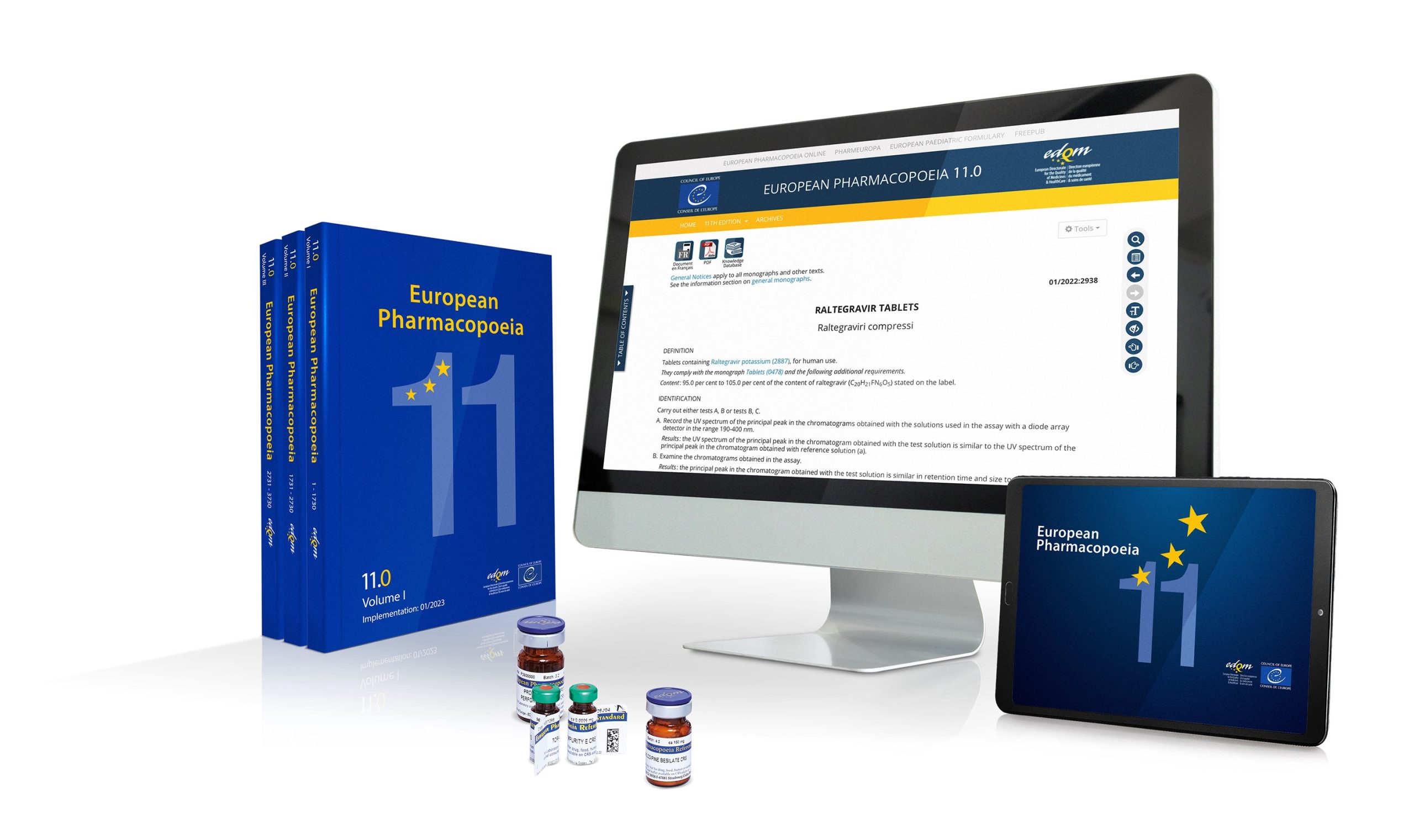
The European Pharmacopoeia (Ph. Eur.) is a single reference work for the quality control of medicines in the 39 Ph. Eur. member states that have ratified the Convention on the Elaboration of a European Pharmacopoeia. It serves to promote and protect public health by providing a legal and scientific basis for the quality control of medicines and their components during the development, production and marketing phases. Its quality standards are legally binding for all producers of medicines and/or substances for pharmaceutical use who wish to market their products in the Ph. Eur. member states. They also facilitate the free movement of medicinal products in Europe and beyond. The Ph. Eur. is widely used internationally, as globalisation and expansion in international trade create a growing need to develop global quality standards for medicines.
Continued growth to serve our stakeholders
Over the course of 2023, 172 texts (new and revised) were published in Pharmeuropa (the Ph. Eur.’s online commenting platform) for public consultation in issues 35.1 to 35.4, and a total of 32 new monographs, five new general chapters and 192 revised texts were adopted at the three European Pharmacopoeia Commission (EPC) sessions in March, June and November. By volunteering their time and technical skills, the Ph. Eur.’s worldwide community of experts continued to produce rich content in a variety of areas, as highlighted below. The texts – whether revised or new – incorporate recently developed analytical procedures and provide science-based and data-driven quality standards for products of high market relevance and emerging domains, thus contributing to public health protection in the Ph. Eur.’s 39 member states and the 130 countries worldwide in which they are applied. An additional 43 texts addressing further topics of interest were added to the work programme, and the EPC also continued to look to the future by creating five new working parties (WPs).
Our experts: a dynamic international scientific community
The work of the Ph. Eur. is driven by a dynamic international community of experts, a network comprising professionals from national authorities (e.g. pharmacopoeia authorities, official medicines control laboratories, licensing authorities and inspectorates), the private sector (pharmaceutical or chemical industries), academia, research organisations and other fields. These highly qualified individuals share their expertise and experience in the 61 expert groups and WPs to which they are appointed by the EPC. They are nominated for three years and their mandate coincides with the publication cycle of each new edition of the Ph. Eur. In 2023, 955 experts continued to devote their time and energy to setting the Ph. Eur. public standards. These experts form the backbone of the Ph. Eur. and provide the essential link between practical experimentation and documentary standards.
Preparing for the future: three new WPs
Predicting future needs regarding the application of new analytical technologies is essential to the Ph. Eur.’s forward-thinking strategy, enabling reflection and discussion on probable trends and potential difficulties in a timely manner. Three new WPs began work for this purpose in 2023.
The Excipients Strategy Working Party (EXS), set up by the EPC in 2022, started its work in 2023. It will focus on continuing to address the specificities of these important pharmaceutical ingredients in Ph. Eur. monographs and reflect on how best to further develop the Ph. Eur. excipient strategy.
The Aluminium in parenteral solutions Working Party (ALU WP) was set up in 2023 to tackle the very specific task of setting a European standard limiting the maximum amount of aluminium in parenteral nutrition solutions.
The Nanomedicines Working Party (NANO WP) is not a new creation, but the new name for the Non-Biological Complex Working Party (NBC WP), which better reflects the types of products and substances its work covers. Reflection on this topic intensified in response to the stakeholder feedback received at the Nanomedicines symposium organised by the EDQM in June 2022. The experts in the expanded WP plan to work on other types of nanomedicines beyond iron-carbohydrates, such as liposomal formulations.
Other activities in 2023
3Rs
Since its adoption, the 1986 European Convention for the Protection of Vertebrate Animals used for Experimental and other Scientific Purposes (Council of Europe, ETS No. 123) has inspired the EPC and its experts to develop a work programme designed to replace, reduce and refine the use of animals for test purposes (the 3R principles). At European Union (EU) level, the use of animals to test medicinal products is strongly discouraged under Directive 2010/63/EU on the protection of animals used for scientific purposes.
The rabbit pyrogen test (RPT) was first described in the Ph. Eur. in 1986. It involves measuring the rise in body temperature induced in rabbits by the intravenous injection of a sterile solution of the substance to be examined. At its 170th session in June 2021, the EPC committed to completely replacing the RPT in the Ph. Eur. within five years. This strategy was further refined in 2022, leading to the elaboration of a new general chapter, Pyrogenicity (5.1.13), providing guidance to users for the selection and implementation of a suitable test to control pyrogenicity in their products (the test for bacterial endotoxins – BET – or the monocyte-activation test – MAT), and the revision of the 59 texts referring to the RPT. These texts, covering topics as diverse as vaccines for human use, blood products, antibiotics, radiopharmaceuticals and containers, were published for consultation in Pharmeuropa 35.1 in January 2023. Comments have since been compiled in view of submitting the package to the EPC in 2024.
A three-day hybrid event focusing on the future of pyrogenicity testing and promoting a global strategy for non-animal-based assays was also organised jointly by the EDQM and the European Partnership for Alternative Approaches to Animal Testing (EPAA). This took place in Brussels in February 2023, on the premises of the European Commission.
The revision of the general chapter Monocyte-activation test (2.6.30) in 2023 – a resolute step towards the removal of the RPT from the Ph. Eur. – was undertaken to streamline the test and bring it into line with current practices. Likewise, the EPC adopted a new MAT for vaccines containing inherently pyrogenic components (2.6.40). This text covers the use of the MAT to monitor the production consistency of inherently pyrogenic vaccines and will be of great help to stakeholders wishing to implement the MAT for such vaccines.
The EPC is eager to promote state-of-the-art technologies and avoid the use of animal-derived reagents. Two monographs on pharmaceutical waters – Water for injections (0169) and Purified water (0008) – were therefore revised to add the possibility of performing the BET using recombinant factor C (rFC).
In the field of veterinary medicines, 14 monographs on veterinary vaccines were revised to promote animal welfare by reducing the number of controls for in vivo batch potency tests in eight monographs; adding humane endpoints (immunogenicity) in three monographs; and deleting the in vivo residual live virus test at final product stage when there is no reversion to virulence in nine monographs, relying instead on the in-process test, preferably performed using cell cultures. All remaining residual live virus tests are performed in vitro.
Selected achievements
New monograph Oxygen (98 per cent) (3098)
The EPC adopted a new monograph Oxygen (98 per cent) (3098), which will enable healthcare facilities to control the quality of oxygen produced on-site using a two-stage adsorption process to remove nitrogen and argon from the air. The elaboration of this monograph presented major challenges, such as accommodating the production of this type of oxygen using a continuous process in non-industrial settings (e.g. in hospitals). Questions also arose as to the suitability of the tests in the existing Ph. Eur. oxygen monographs. As a consequence, the EPC decided to revise the existing monographs on Oxygen (0417) and Oxygen (93 per cent) (2455) to align their test strategies with the format of the newly adopted Oxygen (98 per cent) monograph.
Essential guidance for users of monographs
The EPC adopted a new general chapter Comparability of alternative analytical procedures (5.27) in June 2023; it has since been published in Ph. Eur. Supplement 11.5 (January 2024). This new text was published for information purposes and does not introduce any new requirements not already laid down in section 1.1.2.5 of the Ph. Eur. General Notices. General chapter 5.27 provides practical guidance on how users who wish to rely on an alternative analytical procedure instead of the pharmacopoeial procedure for their testing strategy can demonstrate comparability and indicates that this comparability must be maintained over the life cycle of both analytical procedures.
Herbal drugs
In response to growing interest in the medicinal applications of cannabis and the perceived need for science-based standards governing their quality, the EPC added this plant to its work programme a number of years ago. Since then, the elaboration of a monograph has been entrusted to Group of Experts 13B, whose members worked diligently to navigate the widely varying national regulations that exist side by side and gather information from a number of national authorities concerning the use of this herbal drug, and its quality, in their jurisdictions. The monograph Cannabis flower (3028), was adopted by the EPC in June 2023. It was published in Ph. Eur. Supplement 11.5 (January 2024) and will be applicable as of 1 July 2024. The monograph covers the herbal drug that can be employed as a raw material for the production of extracts or be prescribed as is, to be taken by patients by inhalation or oral administration.
Functionality-related characteristics section
With Supplement 11.2 (published January 2023) five excipient monographs were revised to include a section on functionality-related characteristics (FRCs), boosting the total number of Ph. Eur. monographs that include such a section to more than 100. This important milestone highlights the significant work done by the Excipient Performance Working Party (EXP WP) since the Ph. Eur. took the pioneering step to include the first FRC section in a monograph back in 2008. FRC sections outline the physical or chemical characteristics of an excipient that influence one or more of its functions when used in specific applications in the final product.
Tackling ethylene glycol and diethylene glycol contamination
In response to the public health risk posed by the discovery of ethylene glycol (EG) and diethylene glycol (DEG) contamination in several medicinal products in African and Asian countries (WHO alerts N⁰6-7/2022, N⁰1/2023 and N⁰4-6/2023), the EPC adopted a revised monograph on Propylene glycol (0430). Given the need to act swiftly on this public health issue, the EPC decided to make the monograph immediately available on the EDQM website to give users advance warning of the upcoming change and the corresponding analytical procedure. The EPC and its working groups are also carefully considering whether any other monographs will require updates.
Joint programmes
Biological Standardisation Programme
The Biological Standardisation Programme (BSP) is a joint Council of Europe/EU initiative, partly funded by the EU. Its mission is to establish reference materials for biologicals and to develop and validate new analytical procedures for their quality control, including alternative methods for the replacement of animals in laboratory experiments based on the 3R principles.
In 2023, the programme ran 21 projects in different fields, from vaccines for human and veterinary use to plasma-derived and biotechnology products. Six projects were concluded during the year, two related to the assessment of new methods and four leading to the establishment of replacement BRP/BRR reference standards (see Reference standards).
The EDQM carried forward another eight projects aimed at establishing replacement batches for existing reference standards and three for a new reference standard for biologicals.
Four ongoing projects focused on the development of new compendial methods. Three of these projects are dedicated to applying the 3R principles to the field of quality control of biologicals.

International co-operation and harmonisation initiatives
The Pharmacopoeial Discussion Group
In October 2023, the Pharmacopoeial Discussion Group (PDG) was proud to welcome the first new member in the group’s 34-year history, the Indian Pharmacopoeia Commission (IPC), after a one-year pilot phase. The IPC will now join the founding members, the Ph. Eur., the Japanese Pharmacopoeia (JP) and the United States Pharmacopeia (USP), with WHO as observer, in expanding recognition of harmonised pharmacopoeial standards with a view to achieving global convergence. The lessons learned from this experience will be used to further adjust and refine the group’s working methods and will identify any changes necessary to ensure that the PDG continues to perform efficiently with a larger membership.
One of the primary outcomes of the PDG’s work in 2023 was the general consensus reached on the ongoing proof-of-concept study for the maintenance of the ICH Q4B annexes by the ICH Assembly in June 2023. The PDG reviewed and updated the ICH Q4B Guideline and Annex 5 for the ICH SOP and presented them at the ICH meeting in Prague in November. Following comments received, further refinements are needed and will be made in the course of 2024.
The PDG has successfully harmonised 30 of the 31 general chapters and 48 of the 62 excipient monographs on the current work programme.
Publications, databases and website
Herbal drugs and preparations
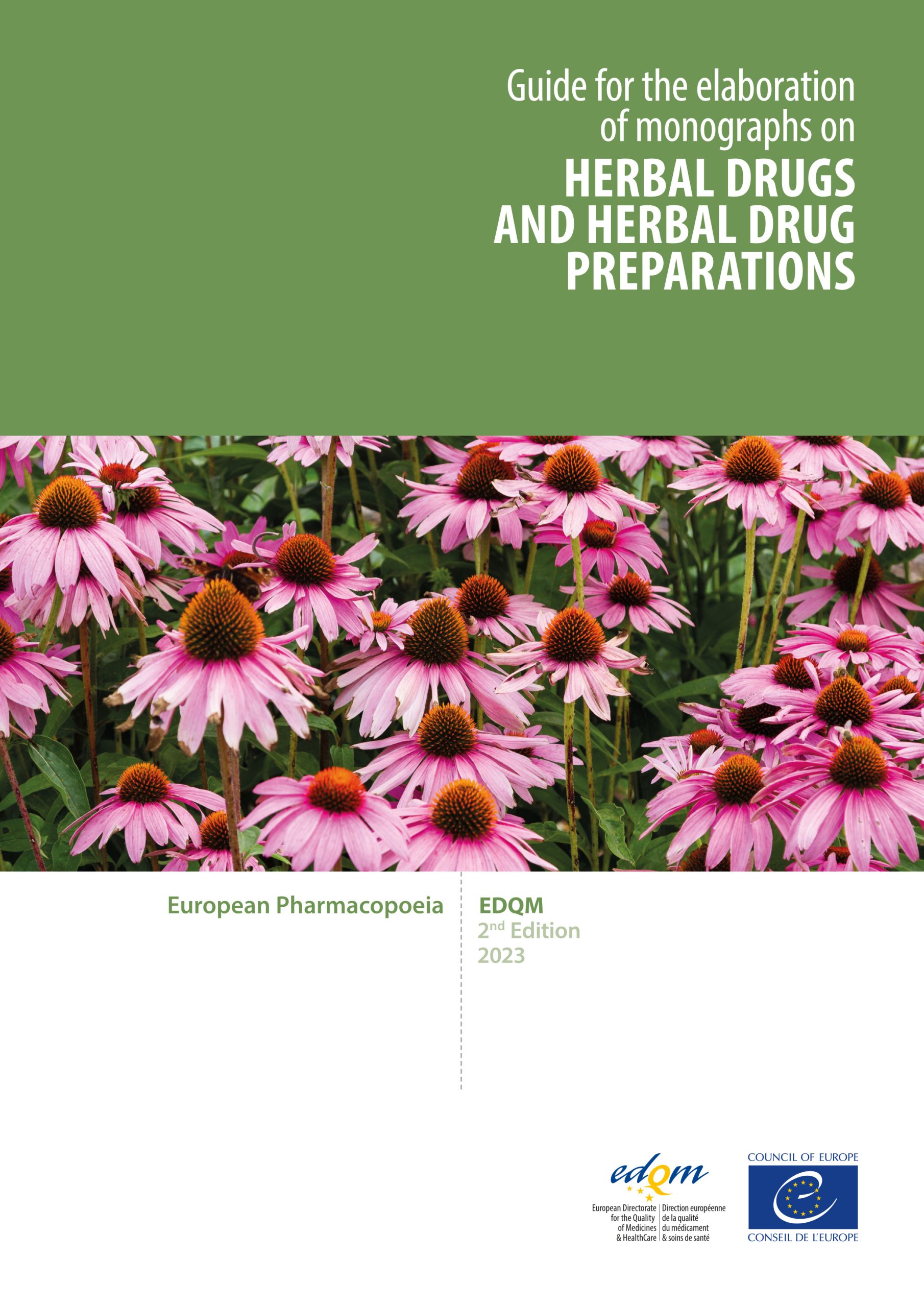
The EPC released the second edition of the Guide for the elaboration of monographs on herbal drugs and herbal drug preparations at its 175th session (March 2023). This guide is invaluable for the authors of monographs on these substances, and also helps Ph. Eur. users understand the principles behind the drafting and revision of herbal monographs. As the first edition was published in 2005, a substantial revision of the text was necessary to incorporate technical progress and new policies adopted since then. The guide, together with other interesting Ph. Eur. technical guides on various different themes, is available on a dedicated page of the EDQM website.
Standard Terms database
Initially drawn up at the request of the European Commission for use in marketing authorisation applications, the Standard Terms database provides users and prescribers with harmonised vocabularies to describe dosage forms, routes of administration, units of presentation, containers, closures and delivery devices for medicinal products. It also includes a mapped terms section, which allows users of external databases across the world to introduce and map their own terms against standard terms, and web services (also known as application programming interfaces) which allow registered users to extract data directly from the database for use in their own systems.